


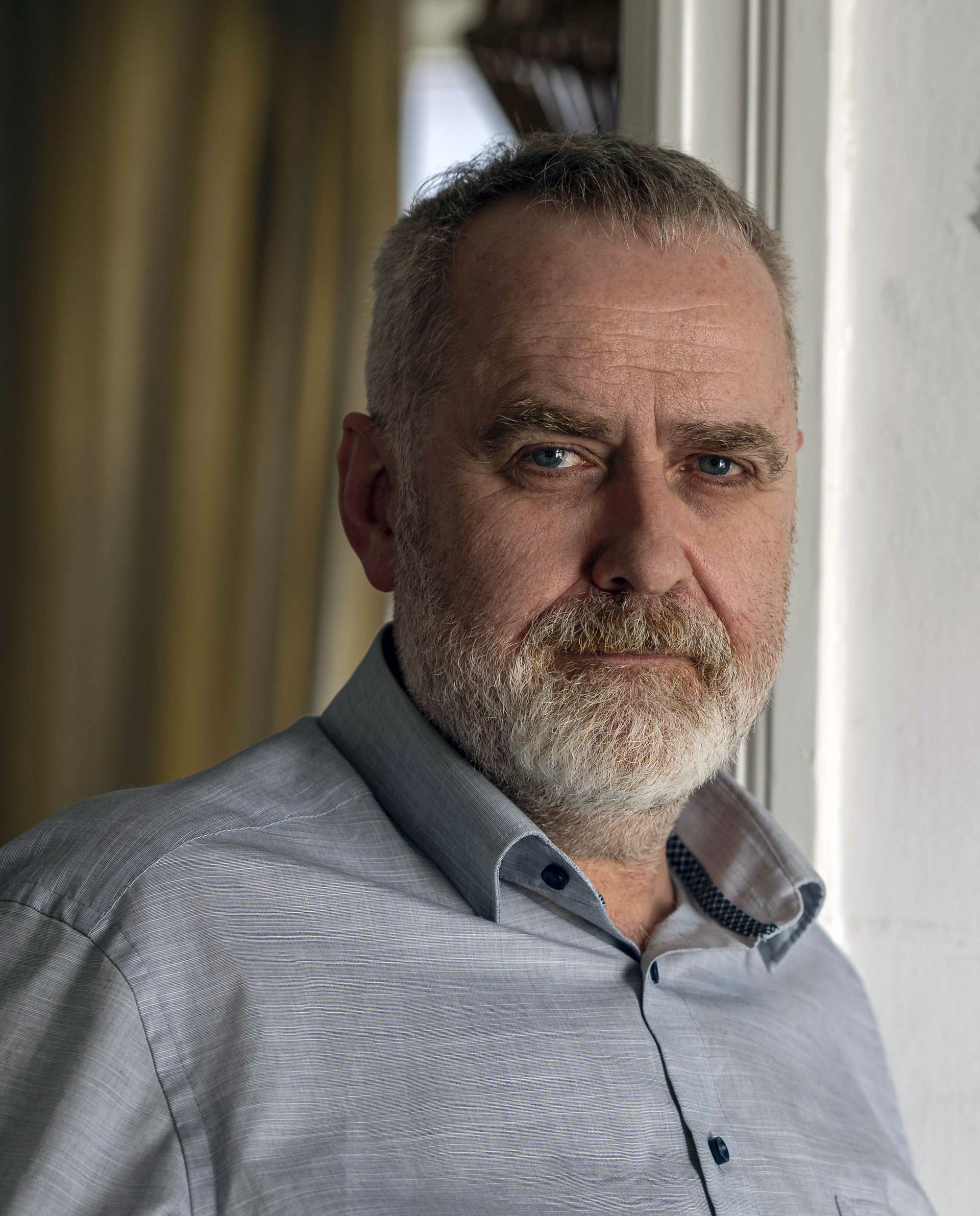
Halldor Baldursson
RENNINGUR – A PICTURE STORY ABOUT THE CREATION AND HISTORY OF HALLGRÍM CHURCH
On the occasion of the 40th anniversary of the dedication of Hallgrímskirkja on October 26, 2026, the artist Halldór Baldursson was commissioned to create a comic book about the building and history of the church. This text is a brief introduction and focuses on the dates that Halldór uses in his story. Those who want a more comprehensive overview of the history of Hallgrímskirkja are referred to the book My Lord in Gratitude – The History of Hallgrímskirkja by Rev. Sigurður Pálsson, published in 2015, and the book Guðjón Samúelsson, the Master Builder by Pétur H. Ármannson, architect, published by Forlagin in 2020.
Three centuries after the birth of Hallgrímur Pétursson (1614-1674), there was a great awakening among the nation to build a church in his memory. This was during a time of upheaval and various obstacles had to be overcome. But Hallgrímskirkja was built and today is a living monument to Iceland's best-known hymn writer. Hallgrímur's Passion Psalms have been published more often than any other Icelandic book and translated into many foreign languages. His legacy can be found in all of Hallgrímskirkja's activities. Among them is the annual Hallgrím Mass, which is held in a similar form to that which prevailed in his time. For years, the Passion Psalms were read and sung every weekday during Lent. In 1993, they were read in their entirety on Good Friday at the initiative of Eyvindur Erlendsson. This tradition is still ongoing and has spread to more churches. Hallgrímskirkja was given the task by Bishop Sigurbjörn Einarsson to publish foreign translations of the Passion Psalms, and it has tried to carry it out to the letter. The parish committee of Hallgríms Church took the initiative, with a donation, to have the Árna Institute undertake a scientific comprehensive publication of Hallgrím Pétursson's works. Hallgrímskirkja emphasizes the arts, whether in words, music, images or other forms of expression. Celebrations, educational activities, various social gatherings and even more events are connected to Hallgrím. Individuals and various groups, children and adults, Icelanders and people from elsewhere, are welcomed. Ever since the settlement began to develop in Reykjavík, Skólavörðuholt has been a popular place for recreation and sightseeing. The national road to Reykjavík ran over the holt and down a ravine that is now called Skólavörðuholt and Skólavörðustígur. The names are derived from a guard that schoolboys built on the hill in 1785 and lasted almost fifty years. In 1868, a two-storey tower with an observation deck was built there, based on a design by the painter Sigurður Guðmundsson. It became a popular stopover for travelers, including cruise ships, but had to be replaced by a statue of Leif the Lucky by the artist Alexander Stirling Calder. The statue was a gift from the United States government on the occasion of the 1000th anniversary of the Alþing and was erected in 1932. In 1924, Guðjón Samúelsson, the state building master, put forward the idea that a Capital of Icelandic Culture would be built on Skólavörðuholt and with it a new cathedral. Two years later, the cathedral congregation decided that a new church should have seating for 1,200 people, but the population of Reykjavík at that time was about 21,000 people in one congregation. From the beginning, a tall tower was planned due to plans for "broadcasting," as radio transmissions were called in those days.
The fortress was not built, but in 1937 Guðjón was commissioned to make a proposal for a plan for a church at Skólavörðuholt. Almost three years later, the Alþingi passed a law dividing Reykjavík into four parishes. The Cathedral congregation was divided into two – the Cathedral congregation and the Hallgríms congregation, and the Cathedral was handed over to its congregation. The law also proposed that a large church be built as soon as possible at Skólavörðuholt. Subsequently, 5 people were elected to the first parish committee of Hallgrímskirkja, with Sigurbjörn Þorkelsson as chairman. On February 2, 1941, the first priests of Hallgrímskirkja, Sigurbjörn Einarsson and Jakob Jónsson, were installed, but ideas for the building were still being formulated. (See the list of priests of Hallgrímskirkja at the end of the text)*. At first, the services of the Hallgríms congregation were held in the Cathedral, but later that year they were moved to the cinema hall of Austurbærskóli. This collaboration lasted until part of the church building could be used, in 1948. At that time, Austurbæjarskólin was also an air raid shelter, so the windows were covered with sandbags, because on May 10, 1941, the British occupation forces took over Iceland. Skipton camp was a military barracks district that stretched over the area where Hallgrímskirkja is now and Austurbæjarskólin. The British often called Skólavörðuholtið Skipton-hill, after the hometown of many of them in Yorkshire, Britain. A year later, the United States took over the military garrison and military barracks districts were built in many places that stood until 1958. In consultation with the bishopric, a church building committee was formed, consisting of 36 people. It was intended to create consensus in society for a church building that would be different and more than an ordinary parish church. The parish committee, as before, had full responsibility for the preparation and implementation of the building. The Women's Association of Hallgrímskirkja was founded on March 8, 1942, and since its inception has been composed of powerful women who have given large gifts to the church. Through bazaars, badge sales, cultural gatherings and entertainment, including outdoor festivals in Hljómskálagarður, the women have raised important funds for the construction of the church building. They also organized literary readings and laid a solid foundation for the powerful artistic work that has been characteristic of Hallgrímskirkja. Its first chairman was Guðrún Jóhannesdóttir. The parish committee and women's association women pressured the government as much as possible to have the settlers removed from the church grounds so that construction could begin as soon as possible. This did not succeed until very late in the day. In mid-1942, two models of the prospective church were presented to the parish committee. They were both by Guðjón Samúelsson, and one of them was chosen for construction. A report in the newspaper Vísi stated: "Hallgrímskirkja in Reykjavík will be the most auspicious building in the country. It should be the property of all citizens." The building fund received public donations, but primarily voluntary donations. A lottery was also held for the church building.
Prolonged discussions between the parish council, the city council and the Reykjavík building committee delayed the start of construction. An outdoor service was held at Skólavörðuholt in August 1944 and it was decided to begin construction of the chapel under the church choir. Finally, a building permit was obtained in November, but there were persistent delays due to drawings and timing. Several barracks were removed from the church grounds. Finally, the first shovel could be taken on December 15, 1945, in snow and frost. It proved difficult to obtain materials for the building during the restrictions, but three years later, on December 4, 1948, the chapel was consecrated for worship. Benefactors donated a stained glass window that was used as an altarpiece, as well as a large Canary Island palm tree that has grown and flourished, just like the church's activities to this day. The artist Einar Jónsson brought the church a large statue of Christ, which, like the palm tree, has moved between construction phases. Construction progressed at a snail's pace because the parish committee was repeatedly denied permission to continue construction. Guðjón Samúelsson died in 1950, and the office of master builder was then assigned to handle all the drawing work for the construction. FINALLY, in mid-1956, a building permit was granted and the walls of the nave began to be built the following year. Hermann Þorsteinsson took a seat on the parish committee in 1960. He played an important administrative and campaigning role in the development of Hallgrímskirkja. The first service in the half-built nave, and barely that, was held on October 14, 1962. The floor had been poured and the walls were half-built. Churchgoers sought shelter under scaffolding in the pouring rain. It was decided to wait with further construction of the ship and begin work on the tower along with its north and south wings.
For a long time, opinions about the building were divided. Violent disputes could be seen in the media, and a large protest meeting was held in 1964 about the continued development of Hallgrímskirkja. But the church also had its supporters and its story continued. In 1965, the tower had grown to 12 meters and the north and south wings had been cast. Three years later, the tower was completed. The tower is 70.5 m high and on top of it is a 4 m high cross. A year later, it was possible to climb the tower at Skólavörðuholt again when the Hallgrímskirkja tower was opened to the public to enjoy the view. This created a source of income to support further development and maintenance. In 1971, 3 large church bells were installed, named Hallgrímur and Guðríður after Hallgrímur's wife and Steinunn, who was the name of their daughter who died young. The bells were a gift from SÍS, the Icelandic Cooperatives Association. We also added carillons and chimes that were gifts from numerous individuals and companies. In 1974, at least two events are worth mentioning. In the summer, a unique service was held in the half-built nave. Actor Jón Sigurbjörnsson performed a hymn about Hallgrím Pétursson by Rev. Jakob Jónsson and music by Þorkel Sigurbjörnsson was performed. Singers from the Reykjavík diocese sang accompanied by members of the Iceland Symphony Orchestra. Choir members stood on scaffolding in the nave and hammer blows from the scaffolding were symbolically integrated into the performance. Four priests served at the altar. And in October, on the 300th anniversary of Hallgrím, a new chapel was consecrated in the newly decorated south wing of the tower. On that occasion, the cornerstone of the church was laid. The chapel's altarpiece was a painting by the artist Stefan Viggo Pedersen, which a Danish friend had given to the church in 1964. The Norwegian priest and benefactor of Hallgrímskirkja, Harald Hope, had sent stone tiles for the entire church floor and timber for the church roof. It was a gift from Norway, purchased with fundraising money with his help.
In 1982, a significant turning point occurred when Hörður Áskelsson was appointed as the church's organist and choirmaster. He became a pioneer in the history of church music in Iceland and was a great promoter of the purchase of the concert pipe organ by Johannes Klais, which was put into use ten years later. Hörður founded the Hallgrímskirkja Motett Choir with a strong emphasis on professionalism. The Hallgrímskirkja Friends of the Arts Association soon became a powerful support group for diverse artistic activities at the church. Friends of the Arts supported the activities with membership fees and received discounts on events. The Hallgrímskirkja Friends of the Arts Association performed ambitious work in the church for almost 40 years, or until 2021, when Hörður retired. In 1996, Hörður also founded the Schola Cantorum, a 12-18-member chamber choir of professionals who specialized in Renaissance music, Baroque music, contemporary music and premieres of works by Icelandic composers. In 1985, less than a year before Hallgrímskirkja was consecrated, the Frobenius organ was consecrated in the south tower spire. It was moved to the nave for the consecration of the church and served there as the church's main organ for the first six years. It was built by the renowned Danish company Th. Frobenius & Sønner and was originally designed as a medium-sized ten-stop choir organ with a clear Nordic neo-Baroque tone. In August 2023, the organ was dismantled, transported back to Denmark where it was rebuilt and expanded, among other things, to a 20-stop organ. The reconstruction opened up new possibilities for concert performances, such as performances of works written for two organs. It was rededicated as part of the 350th anniversary of Hallgrímur Pétursson's death in 2024. Today it is one of the two main organs of the church and is most often referred to as the choir organ to distinguish it from the large Frobenius organ. The tower of Hallgrímskirkja took on an important role when the historic meeting of world leaders Mikhail Gorbachev and Ronald Reagan took place in Höfði on October 11, 1986, as foreign television stations competed to obtain a license to use it for live broadcast. On October 26, 1986, almost 41 years after the first shovel was turned, Hallgrímskirkja was consecrated in a solemn ceremony attended by almost 2,000 guests, both domestic and foreign. Among them was a large part of the country's clergy. In addition to Harður Áskelsson, organist and choir director, the instrumentalists were members of the Iceland Symphony Orchestra and the Reykjavík School of Music Brass Band. The motet choir and members of the Hallgrímskirkja Choir sang. All hymns were by Hallgrím Pétursson to old hymns arranged by Þorkell Sigurbjörnsson. The Bishop of Iceland, Pétur Sigurgeirsson, preached, the President of Iceland, Mrs. Vigdís Finnbogadóttir addressed the guests and eight priests served at the altar. When the consecration phase of the church was reached, it was clear that 35% of the construction costs came from public funds, while donations from the congregation and its benefactors, individuals, associations and companies, accounted for 65% of the costs. In the first year of operation of the newly consecrated church, a grand Church Art Festival was held by Hallgrímskirkja and the Hallgrímskirkja Friends of the Arts Association with a main emphasis on music and visual arts, but also drama and dance. There were a total of 15 Church Art Festivals, usually held every other year in conjunction with the Reykjavík Arts Festival. The last Church Art Festival was held in 1992. An important milestone in the history of the church occurred in 1992 when the concert pipe organ by Johannes Klais was put into use. It is by far the largest organ in Iceland and renowned among organists around the world for its quality and diverse range of voices. The Klais organ is used for church services and concerts. It is also popular to play on it and record in the church. It also fits particularly well with the space of the church, partly thanks to the help of architect Andrés Narfi Andrésson. The organ has 5,275 pipes, varying in length, diameter, material, shape, construction, pitch and sound characteristics, the longest pipe being about 10 meters. Since its introduction, the organ has been the heart of the annual festival, Organ Summer in Hallgrímskirkja, which is held with great ambition in July and August each year. The portable organ stand has significantly expanded the organ's possibilities for use, both in terms of concerts and ceremonies. The organ was largely financed by donations, among other things, people were offered the opportunity to buy a gift certificate that confirmed the person's ownership of a specific pipe. The organ fund is still in operation because the organ requires regular cleaning to live up to its name.
In 1993, the pulpit was consecrated. Its designer is the architect Andrés Narfi Andrésson, while the stained glass windows are by the artist Leif Breiðjörð. Among other things, the handwriting of Hallgrímur Pétursson can be seen in them. Over the years, the church has been named after various works of art and has also purchased works. In 1995, the Hallgrímskirkja Art Museum was founded by the Hallgrímskirkja Parish Committee, the Hallgrímskirkja Women's Association and the Hallgrímskirkja Friends of the Arts Association to manage the collection. Art historian Þóra Kristjánsdóttir was the chairman of the art museum's board in the early years. It is now clear that the museum's charter needs to be updated and adapted to changing requirements and circumstances. That review is ongoing. In 1999, a stained glass window by Leif Breiðfjörð, a memorial window, was installed above the church entrance. The artist named the window Glory, Power, Respect. At the bottom you can see Hallgrím Pétursson with a book and a stylised weapon, while at the top are the Greek letters alpha and omega, symbols of the beginning and the end with a reference to the words of the Book of Revelation. The policy has been formulated that daylight and sunlight will play a central role in the nave. Two years later, in 2001, a new baptismal font was consecrated, also the brainchild of Leif Breiðfjörður, donated by the Women's Association of the church. It is in the style of the church, made of columnar rock and a solid, clear glass sculpture with embedded texts by Hallgrím Pétursson. Ten years after the church's consecration, the City of Reykjavík began work on the completion of Skólavörðuholt, following agreements with the parish committee led by chairman Jóhannes Pálmason. In collaboration with Hallgrímskirkja, the extensive project of designing the entire surroundings of Hallgrímskirkja was undertaken, and Hallgrímstorg was one of its phases. The designers of the project were Ragnhildur Skarphéðinsdóttir, landscape architect, and Ögmundur Skarphéðinsson, architect. Ragnhildur took the idea for the paving in the square from Celtic church crosses. They incorporated the statue of Leif the Lucky into the square's surface by creating a ship shape under and outside the lower part of the pillar. Another version of the cross shape can be seen south of the church. In 2005, the innovation of choosing mass servers from among the parishioners was introduced in Hallgrímskirkja at the initiative of Rev. Jón Dalbú Hróbjartsson, and this has left its mark on all celebrations since then. Björn Steinar Sólbergsson was appointed organist at Hallgrímskirkja in 2006 and music director of the church since 2021. He regularly performs as a soloist here at home and abroad. In the 40th anniversary year of the dedication of Hallgrímskirkja, Björn Seinar also celebrates 40 years as organist at the National Church, 20 years at Akureyri Church and 20 at Hallgrímskirkja. On that occasion, the album Icelandic Organ Music was released earlier this year, in which he plays a diverse selection of Icelandic organ music on the Klais Organ. The album was also released under the name Icelandic Organ Music on major streaming services. In 2010, (March 28), a double-winged bronze door in the main entrance of Hallgrímskirkja was consecrated by the Bishop of Iceland Karl Sigurbjörnsson, and its author is the artist Leifur Breiðfjörður. Generous donations from private individuals made the construction possible. On the front of the door is a relief with symbols from the history of church art. The frame of the image is a four-leaf shape that is reminiscent of the same shape in the stained glass window above the door. The background of the icons is the red color of a glass mosaic that refers to the blood of Christ, his love and sacrifice. Above the door is a seven-line text, an entrance verse by Hallgrím Pétursson. With the bronze door, the construction of the church and the finishing of the exterior were mostly completed, but ongoing repairs and improvements began. Activities flourished as never before and by this time Hallgrímskirkja had become the most visited church in the country.
As previously mentioned, the arts have been closely connected to the work at Hallgrímskirkja from the beginning, such as word, music, visual art, drama and dance. In 2015, Hallgrímskirkja's Christmas was first staged in the church. It is a play based on the story of Steinunn Jóhannesdóttir and has now become an annual event attended by thousands of schoolchildren each Advent. In 2019, a new English translation of the Passion Psalms (Gracia Grindal) was published with illustrations from Hallgrímskirkja in collaboration with Skálholt Publishing. Björn Sigurbjörnsson's Danish translation was republished in the same edition in 2024. On the occasion of the 40th anniversary of the consecration, the Passion Psalms will be published for the 4th time by Hallgrímskirkja in the original language, with a summary of the Passion story along with glossaries and various indexes. Since 2019, it has been possible to attend evening mass in Hallgrímskirkja. It is an open and serene venue for those who want to deepen their religious experience, find peace and seek a different form than traditional worship. Music and lighting are unconventional. Evening masses are offered on the last Thursday of each month during the winter months. In 2021, the Hallgrímskirkja Choir was founded and Steinar Logi Helgason was appointed choir director. He also works as an organist and takes an active part in the Organ Summer program each year. The choir now has around 70 members and has participated in worship in Hallgrímskirkja since its foundation, as well as hosting concerts and recordings. It puts a lot of effort into performing Icelandic choral music and promotes innovation by premiering new compositions, many of which have been written especially for the choir. It has had fruitful collaborations with the Brák Baroque Orchestra, the Reykjavík Chamber Orchestra and the Iceland Symphony Orchestra. On the occasion of the 40th anniversary of the inauguration of Hallgrímskirkja, the first LP of the Hallgrímskirkja Choir, In caelo et in terra, will be released on October 25, 2026. In 2022, new interior and exterior lighting was installed in Hallgrímskirkja, designed by the Icelandic lighting company Liska. The old lighting equipment was old and consumed a lot of energy. It was replaced by high-quality LED lighting that offers countless lighting options. The system contains about 60 programmed lighting settings that change automatically depending on daylight, season and different events in the church, such as masses, concerts or moments of silence. In addition to different white colors, the system can also use colors so that the church can be illuminated in all the colors of the rainbow for special occasions. The lighting has already won several international awards, including the Award of Distinction for the interior lighting, which is the highest honor awarded by the Illuminating Engineering Society of North America. Skólavörðuholtið and Hallgrímskirkja have long been the center or starting point of various festivals and parades, such as June 17, Gay Pride in August and the Women's March on October 24. Since the beginning of the Reykjavík Winter Festival in 2002, Hallgrímskirkja has been an active participant. The church's unique architecture has been considered the ideal "canvas size" for spectacular light art that has been projected onto the facade, where the splendor of the lights enjoys itself on a few dark February nights each year. Through the foresight, perseverance and ambitious work of many people, Hallgrímskirkja has confirmed its importance as a significant monument to Hallgrím Pétursson. ... and as written on the church's entrance door, COME TO ME, the church welcomes you.